
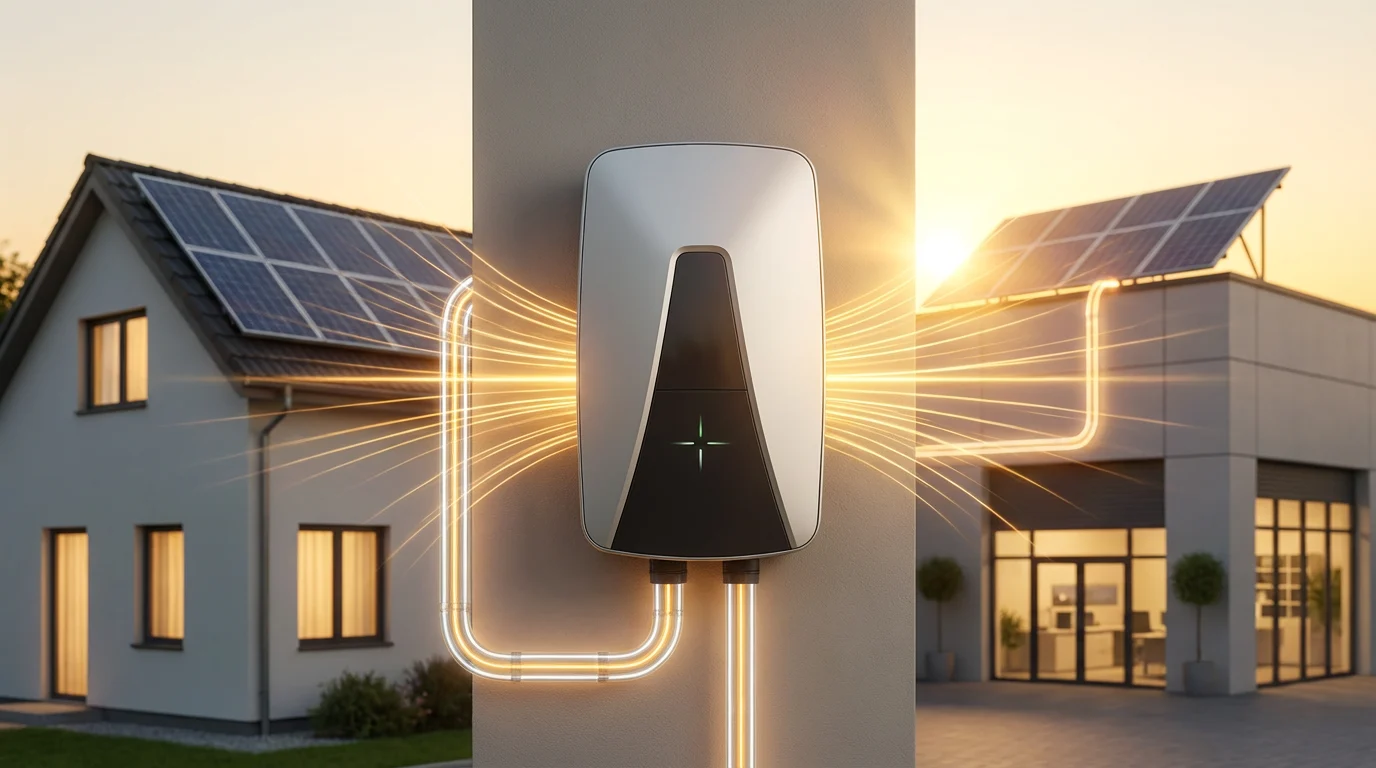
What Is a Solar Inverter?
A solar inverter is one of the most essential components in a residential or commercial solar energy system. Its primary role is to convert the electricity generated by solar panels—direct current (DC)—into alternating current (AC), which powers your home or business and is compatible with the utility grid.
This conversion enables the solar electricity you generate to be used efficiently by appliances or exported to the grid. Inverters are part of a class of devices known as power electronics, which manage and regulate the flow of electrical power.
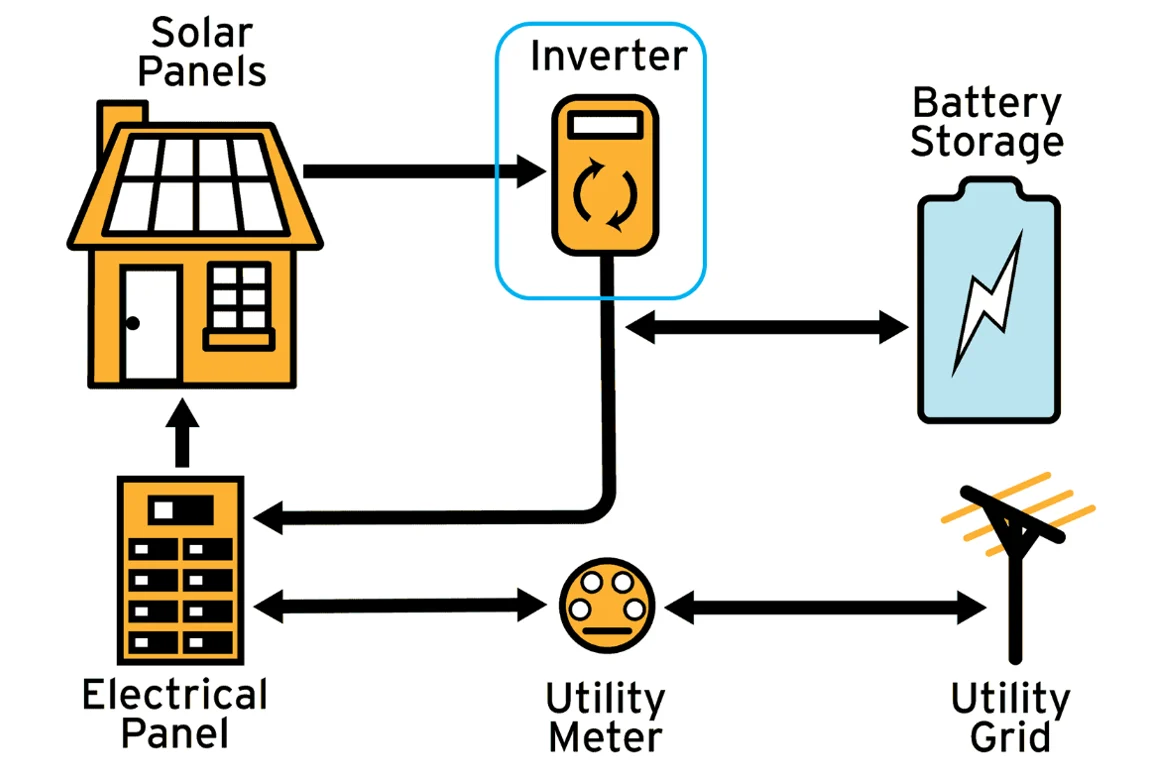
Picture Reference – https://www.energytrust.org/solar-storage/
How Inverters Convert DC to AC
Inverters convert DC electricity into AC by rapidly switching the direction of the DC input. This process creates an AC output that mimics the grid’s alternating pattern. Additional filters and electronic components refine the signal into a smooth sine wave, which is ideal for safely powering household or commercial devices and ensuring grid compatibility.
From Motors to Microchips: The Evolution of Inverters
Inverter technology has evolved significantly. Originally mechanical, using spinning motors to reverse current flow, inverters today are built with transistors—solid-state electronic switches made from materials like silicon. These modern inverters are compact, efficient, and reliable, perfectly suited for both homes and businesses.
Beyond Conversion: What Smart Inverters Can Do
Today’s inverters offer much more than basic power conversion. In a residential or commercial setup, smart inverters can monitor energy production, track performance, and communicate with energy management systems or mobile apps. If you have solar-plus-battery storage, your inverter may also manage energy storage, charging the battery when excess solar is available and discharging it during outages or peak demand times.
Toward an Inverter-Based Grid
With growing numbers of solar installations in neighborhoods and commercial areas, inverters are becoming increasingly important to the overall energy infrastructure. Unlike traditional fossil-fuel generators, inverter-based systems can quickly adapt to fluctuating grid conditions and offer valuable flexibility and stability.
How Inverters Support Grid Stability
Residential and commercial solar inverters now support vital grid services. Smart inverters can remain online during minor disruptions (known as “ride-through” capability) and adjust power output when voltage or frequency shifts. They can also help balance energy supply and demand by responding to utility signals, especially useful for businesses aiming to reduce peak demand charges.
Grid-Forming vs. Grid-Following Inverters
Most inverters used in homes or businesses are grid-following, syncing their output to an existing grid signal. However, grid-forming inverters are gaining traction, especially in systems with energy storage. These can start up independently during outages (black start capability), enabling a solar-powered home or facility to function even without grid power.
Inverters and Reactive Power
Reactive power helps maintain proper voltage levels on the electrical system. Advanced inverters in residential and commercial systems can manage reactive power locally, improving power quality and reducing strain on the larger grid. This functionality is especially helpful in densely populated areas with lots of solar.
Types of Solar Inverters
- Central inverters: Common in commercial or industrial-scale installations where many panels are grouped together.
- String inverters: Popular in both residential and small business setups; link a group of panels to one inverter.
- Microinverters: Attached to individual panels, ideal for residential systems with partial shading or complex roof layouts.
Hybrid inverters can manage both solar panels and battery storage, making them a smart choice for homes or commercial buildings seeking backup power and energy independence.
Conclusion: Why Inverters Matter More Than Ever
For both homeowners and business operators, inverters are the brains of the solar system. They ensure the solar energy you generate is usable, safe, and grid-compatible. With smart features, energy monitoring, and grid support functions, today’s inverters are key to maximizing your system’s value and reliability.
Summary:
- Inverters convert solar panel DC electricity into usable AC power for homes and businesses.
- They produce clean, grid-compatible sine wave electricity.
- Smart inverters provide system monitoring and backup capabilities.
- Grid-forming inverters can restore power during outages.
- Inverters support grid stability with frequency response and reactive power.
- Choose between central, string, and microinverters based on your system’s size, layout, and budget.
This article was based on multiple resources including –
- An article by the U.S. Department of Energy – https://www.energy.gov/eere/solar/solar-integration-inverters-and-grid-services-basics
- https://www.youtube.com/watch?v=8XI6GVLjPng&t=58s from ‘The Engineering Mindset’
Read about the Solar panel technology in our article – ‘Technology Behind Popular Solar Panels and Their Comparison’