

What is Net-Metering
This is an excellent feature that provides flexibility and cost optimization to homeowners or businesses with an installed solar system. Solar electricity production varies during the daily 24-hour period. It peaks during the middle of the day and fades away in the evenings to become entirely zero in the nighttime. However, we use electricity throughout the 24-hour period!
During the peak sun hours, a typical solar system will generate more electricity than the consumed during that time. This excess could either be stored in the batteries or sent to the electricity grid with Net Metering flexibility. In the nighttime the entire electricity consumption is taken from the same electricity grid. So the electricity grid system acts like a big buffer, which takes in the excess solar electricity and provides electricity when your solar system produces less electricity than what is needed at the moment.
Net Metering is therefore an arrangement with electricity utilities companies like TXU, (Shop.TXU.com – Free Nights And Solar Days), Reliant (The electricity provider Texans trust | Reliant Energy), or many other utility companies where a consumer selects plans allowing hoeowners or business to send excess solar electricity to the local electrical grid at an agreed price or credits. Typically, utilities do not pay cash for excess generation; instead, credits are applied to future bills
How is Net-Metering Beneficial
This reduces your net electricity cost and provides faster payback on your solar system. By sending surplus solar electricity to the grid, you avoid ‘wasting it’. In this arrangement, you may also reduce the battery storage, saving costs. Net metering makes solar energy more affordable and practical by allowing solar customers to use the grid as a “virtual battery,” storing excess power as credits and using them when needed.
Do I Need New Equipment
Usually, a bi-directional meter is used to measure both the electricity consumed from and supplied to the grid. A bi-directional meter separately records both the electricity you use and the surplus electricity you export to the grid. Most of the homes are equipped with this. During our site survey, in case our electrician finds that a new one is needed, Big Bright Solar staff will take care of it.
Once the solar system is operational, the ‘import’ and ‘export’ of the electricity work fully autonomously. In the month-end electricity bill, one can see the various breakdowns, how much surplus solar electricity was sent to the grid, and how much was imported.
Solar Electricity Buyback Plans
Big Bright Solar will consult with you after the installation to see your electricity consumption pattern and advise you on the electricity plans that best suit your needs. Texas maintains an efficient marketplace, Texas Solar Buyback Plans – Texas Power Guide, to choose the best-suited plans. In Buyback plans, any credits not used will be banked, up to a certain amount, to automatically pay for future energy charges. Credits roll over in dollar values and not kWh values.
Some examples below:
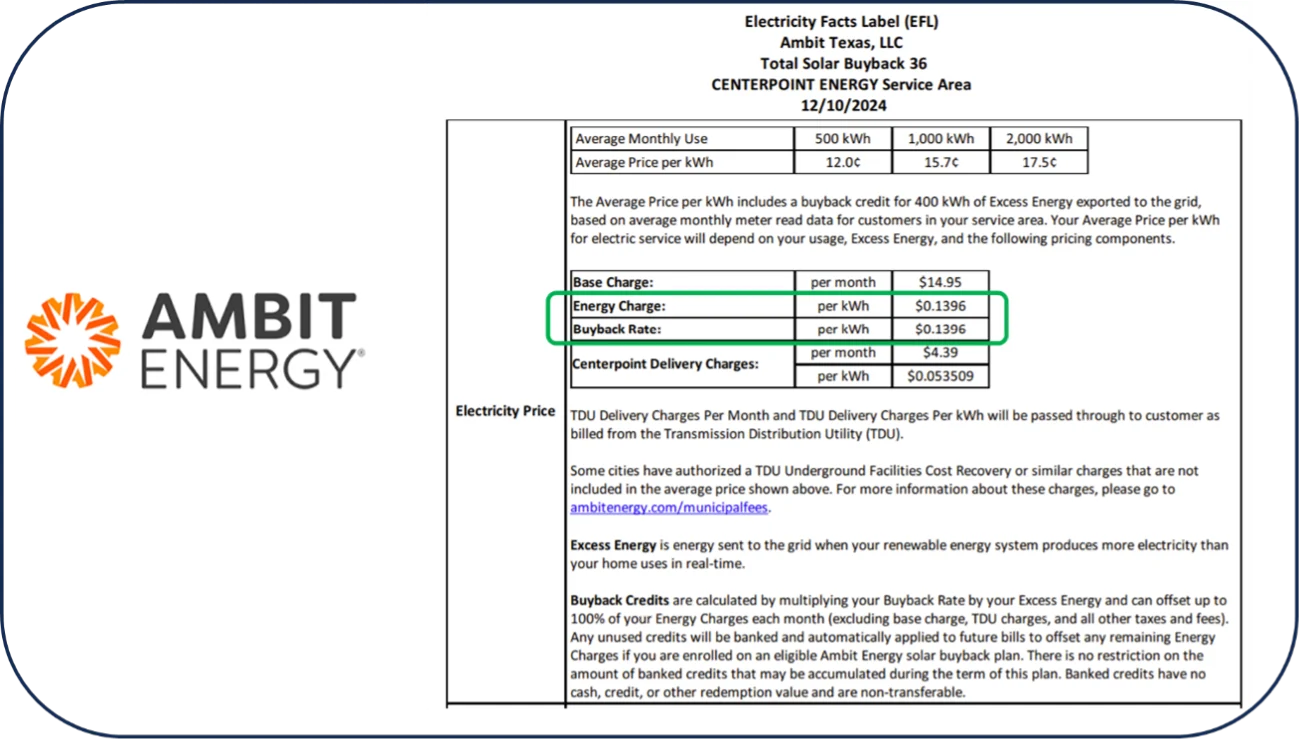
In the example below from Ambit Energy (https://www.ambitenergy.com/) notice that the buyback rate (for solar surplus electricity) is identical to what one pays to buy electricity from them. The electricity contracts need to be analyzed carefully to assess full costs.
Many Utility Companies in Texas that Promote Solar Electricity Buy back Plans.
Some Examples:
- Chariot Energy – https://chariotenergy.com/
- Frontier Utilities – https://www.frontierutilities.com/
- Gexa – https://www.gexaenergy.com/for-home
- Reliant Energy – https://www.reliant.com/en/residential/electricity/renewable-energy/solar/solar-payback-plan
- TXU – https://www.txu.com/en/electricity-plans/home-solar-buyback
Note: The utility companies often change the Electricity plans. Current information should be independently checked at the time of solar installation. Big Bright Solar professionals will help you determine an ideal plan for your usage pattern.
Read our expert articles explaining the solar panel technologies (Technology Behind Popular Solar Panels and Their Comparison), the inverters (Understanding Solar Inverters: The Heart of Any Residential or Commercial Solar System), and the Solar tax credits (Solar Tax Credits Reduce Your Net Cost)